
Fall Moving Tips: How to Move Long Distance in Autumn

Published Updated 8 min read
On this page
- Why fall is a smart window for a long-distance move
- The real risk in a fall move: first snow arrives on a schedule
- How we run fall long-distance moves differently
- How should you pack for a multi-day fall move?
- Weather and safety on loading and delivery day
- What a fall move actually costs versus summer
- Choosing a mover for a fall long-distance move
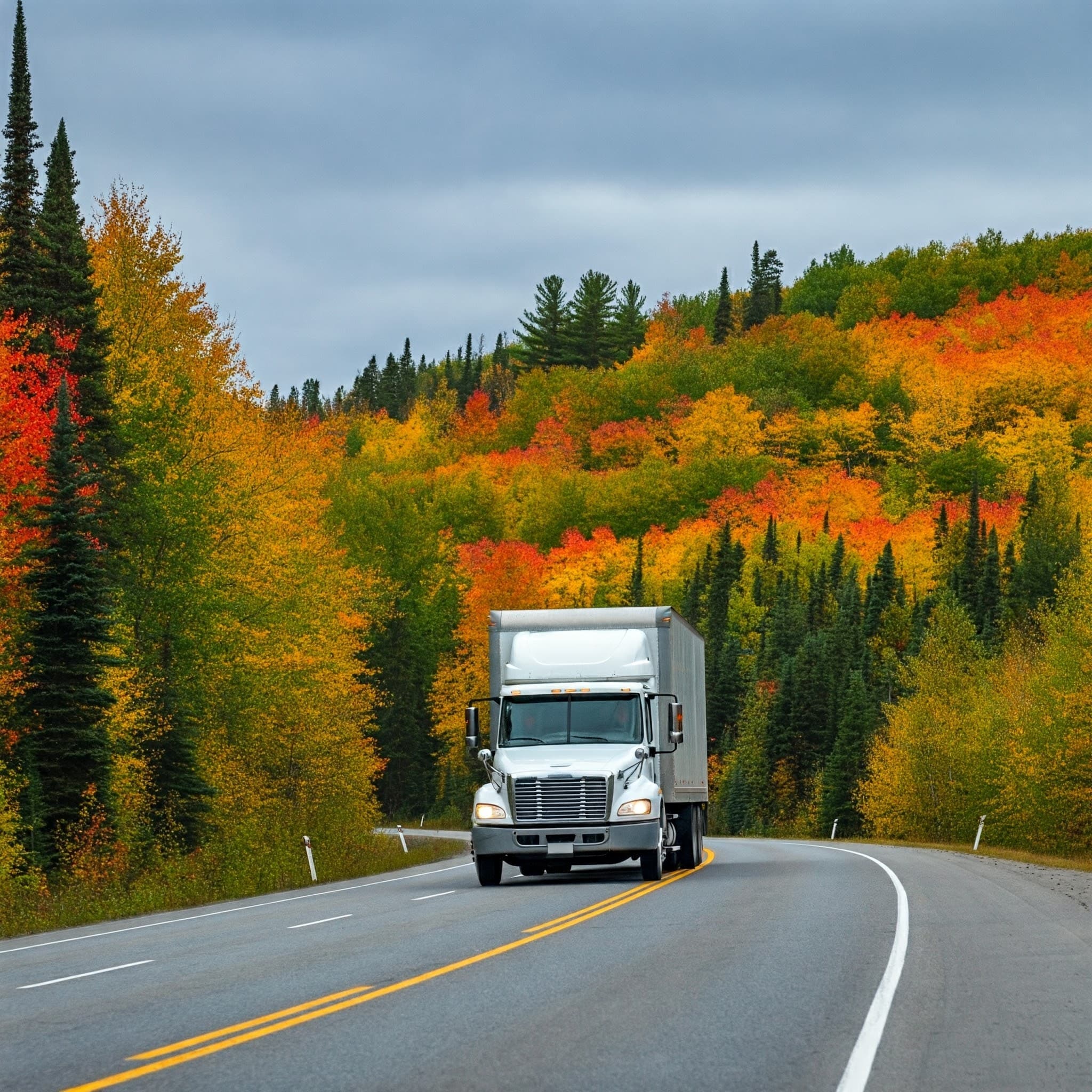
Quick answer: Fall (September to November) is the best-value window for a long-distance move in Canada. Demand drops after the summer rush, so quotes run lower and dates open up — but the trade-off is a real race against the first snow, which can reach Calgary and Edmonton in October and Toronto by mid-November. Book 4–6 weeks out, pack cold-weather gear so it stays reachable across a multi-day haul, and choose a mover that plans transit around the weather rather than hoping for the best.
I’m Mete Kalfa, Director of MTS Moving & Storage. I’m a second-generation mover, we’re based in Mississauga, and our crews run interprovincial moves across Ontario, Alberta, British Columbia, and Quebec year-round. Fall is my favourite season to move a household long distance — but only if you treat it as a long-distance problem, not a local one. The two things that decide whether an autumn move goes smoothly are the calendar and the map: how many days your goods are on the road, and which mountain pass or prairie stretch they cross while they’re out there.
Why fall is a smart window for a long-distance move
The summer peak (roughly June through August) is when most Canadian households move — kids are off school and closings cluster around it. That concentration is exactly why fall is the value season: once September arrives, the trucks free up and the pricing eases. In our own books, a fall long-distance quote typically runs 15–25% below the July peak on the same corridor, and dates that were impossible to get in summer suddenly open up.
Here is how the seasons actually compare for a long-distance move in Canada:
- Mover demand
- Peak
- Typical rate vs. peak
- Highest (baseline)
- Main weather risk
- Heat; heavy traffic
- Book ahead
- 8–12 weeks
- Mover demand
- Falling
- Typical rate vs. peak
- ~15–25% lower
- Main weather risk
- First snow / early frost
- Book ahead
- 4–6 weeks
- Mover demand
- Lowest
- Typical rate vs. peak
- Low
- Main weather risk
- Storms, closed passes, cold
- Book ahead
- 2–4 weeks
- Mover demand
- Rising
- Typical rate vs. peak
- Moderate
- Main weather risk
- Rain, mud, flooding
- Book ahead
- 6–8 weeks
Fall also lines up well with the housing market. The busiest stretch for Canadian home sales is the handoff from May into June; activity cools through the autumn (CREA), which can mean a little less competition on the buying side and more room to schedule your move on your terms rather than the market’s.
The real risk in a fall move: first snow arrives on a schedule
The mistake I see people make is treating “fall” as one mild season. On a long-distance move it isn’t — your goods can leave a green, 15°C Toronto and arrive in a Calgary that’s already had its first snow. Autumn weather changes faster the farther west and north you go, and a multi-day haul crosses several of those zones at once.
Here is roughly when the first measurable snow shows up along the corridors we run, based on Environment Canada climate data:
- Calgary: first snowfall of autumn usually arrives in September or October, with accumulation building through November (Current Results / Environment Canada normals).
- Edmonton: first snow typically lands in October and starts to stick by November.
- Toronto and southern Ontario: first snow averages around mid-November — several weeks later than the Prairies.
The practical takeaway: an early-October move between Ontario cities is effectively a fall move; the same dates on an Ontario-to-Alberta or a BC-mountain corridor can already be a winter move at the far end. If your move crosses a mountain pass (the Coquihalla, Rogers Pass, Kicking Horse), early snow at elevation is the thing to plan around, not the temperature at your front door. For a move later in the season, our winter long-distance moving guide covers the cold-end playbook in full.
How we run fall long-distance moves differently
Fall is where an experienced long-distance crew earns its keep, because the plan has to bend to the forecast. A few things we do as a matter of practice at MTS:
- We watch the destination and the route, not just the pickup city. Before a fall departure we check conditions at the delivery end and along every pass in between, and we’ll shift a load date by a day to let a storm clear a mountain corridor rather than sit in it.
- We build weather slack into transit. A long-distance move is already multi-day; in fall we don’t promise a delivery window so tight that one bad pass blows it. Honest date ranges beat optimistic ones you can’t keep.
- We protect against wet, not just cold. Wet leaves, rain, and slush track mud and moisture into a truck and onto floors. Our crews use floor runners and tarps at both ends and keep moisture-sensitive items (electronics, upholstery, documents) off the truck floor and away from the doors.
How should you pack for a multi-day fall move?
The difference between packing for a local fall move and a long-distance one is time: your boxes are sealed and out of reach for days, through changing temperatures and humidity. Pack for that.
- Keep cold-weather gear reachable, not buried. Coats, boots, and a warm layer for everyone should ride with you or go in a clearly marked “open first” box — you may leave in autumn and arrive in early winter.
- Guard against moisture across transit. Use vacuum-sealed bags for clothing and bedding, and add extra padding and individual wrapping for anything that reacts to damp or temperature swings.
- Label by room and priority. Colour-code or mark fragile and essentials boxes so they’re the first things located at delivery. Our full long-distance moving checklist walks through the sequence week by week.
- Pack one true essentials box. Toiletries, a change of clothes, phone chargers, medication, and key documents — the things you need the night you arrive, before the truck is unloaded.
Weather and safety on loading and delivery day
Fall conditions create most of their risk at the two ends of the move — the driveway and hallway where people carry weight over wet or icy ground.
- Check the forecast at both ends in the days before your move, and have a backup plan for rain or an early snow squall.
- Keep footing safe. Clear leaves and debris from walkways, lay runners or old blankets in high-traffic areas, and keep salt or sand on hand if there’s any chance of frost or early snow at the delivery city.
- Cover what goes outside. Waterproof covers or tarps protect furniture and boxes on the trip between the door and the truck.
- Dress in layers and keep hot drinks and a first-aid kit accessible — temperatures swing a lot between a morning load and an afternoon unload.
What a fall move actually costs versus summer
The headline is real: fall is cheaper because demand falls. On the same corridor, with the same crew and the same volume, we see fall quotes land roughly 15–25% under the July peak, and mid-week fall dates are the cheapest of all. To turn that into an accurate number for your move, get a written, itemized estimate rather than a phone figure — for a full breakdown of what drives a long-distance price, see our guide to long-distance moving costs in Canada.
Because fall books faster than winter but slower than summer, 4–6 weeks of lead time is usually enough to lock a good rate and date. Leave a small contingency in your budget for a weather-related delay — it’s rare, but on a long haul it’s the honest thing to plan for.
Choosing a mover for a fall long-distance move
The Canadian moving industry has been unregulated since the mid-1980s, so the burden of vetting is on you — and it matters more in fall, when a mover’s willingness to route around weather separates the good ones from the cheap ones. Before you book:
- Get it in writing. Insist on a written, itemized estimate on company letterhead. The Government of Canada’s own moving advice warns against phone-only quotes and large upfront deposits, and recommends comparing estimates from at least three reputable movers.
- Check credentials. Look for Canadian Association of Movers (CAM) membership, which commits a mover to a code of ethics and a complaint process, and confirm standing with the BBB. MTS is a CAM member and holds a 4.9-star rating from 741 Google reviews, with listings on Yelp, HomeStars, and BBB (Mississauga).
- Understand the coverage. Standard mover liability in Canada is only $0.60 per pound per item unless you buy replacement-value protection (Government of Canada) — worth understanding before your goods spend days in transit. Ask directly how a mover handles weather delays and route changes.
Get all of this settled before the season tightens. If you’d like an honest, itemized fall quote for your corridor, call us at +1 (888) 322-1968.
Related guides

When is the best time to move long distance?
The best time to move long distance in Canada is fall or winter, mid-week and mid-month, when mover rates drop 20-30%. Season-by-season guide from MTS.
Learn more
Winter long-distance moving guide
Winter long distance moving tips from a second-gen Canadian mover: off-season savings, weatherproofing a load, winter-tire rules, and route-status tools.
Learn more
Spring long-distance moves
Planning a spring long-distance move in Canada? See how spring load bans, weather and off-peak rates affect your interprovincial move — and how to plan.
Learn more
Summer long-distance moving tips
A Canadian mover's summer moving guide: what peak season really costs, how to protect heat-sensitive items in an un-cooled trailer, and how to stay safe.
Learn more
Director, MTS Moving
Mete Kalfa is the Director of MTS Moving and a second-generation long-distance relocation expert. Specializing in inter-provincial moves across Ontario, Alberta, and British Columbia, he leverages decades of family legacy and active Canadian Association of Movers (CAM) membership to provide transparent insights that protect consumers from industry scams.