

On this page
- What should you pack first when moving?
- Out-of-season items
- Books, linens, and collectibles
- Décor and wall art
- Specialty and spare kitchenware
- What should you pack last when moving?
- Essential daily items
- Vital documents
- Cleaning supplies
- Basic kitchen items
- Personal electronics
- The first-night box: what we tell every customer to pack
- Tips for an efficient packing process
Quick answer: Pack first the things you use least — out-of-season clothes, décor, books, and spare items — working room by room, and leave daily essentials, toiletries, and important documents for last. Keep a first-night box with you rather than on the truck so you are not unpacking everything the moment you arrive.

I am Mete Kalfa, director of MTS Moving and Storage and a second-generation long-distance mover based in Mississauga, Ontario. On an inter-provincial move your belongings may spend several days in transit over hundreds of kilometres, so the order you pack in matters more than it does across town. Pack first the items you rarely touch; pack last the ones you use every day. The table below shows the sequence at a glance.
- Pack last (daily essentials)
- Important documents (passports, certificates)
- Pack last (daily essentials)
- Personal electronics and chargers
- Pack last (daily essentials)
- Toiletries and daily medications
- Pack last (daily essentials)
- Cleaning supplies
- Pack last (daily essentials)
- Basic kitchen tools and a few dishes
- Pack last (daily essentials)
- A first-night box for each person
What should you pack first when moving?
Our crews pack inter-provincial loads room by room, sealing the low-use rooms first and leaving daily-use spaces for last. A spare bedroom or a storage closet usually closes out in six to ten boxes, and getting those done early builds momentum without touching your routine.
Out-of-season items
Start with what you will not need before moving day — these are usually stored away anyway, so boxing them up early costs you nothing:
- Winter coats: Heavy coats, parkas, and cold-weather outerwear free up closet space when they go first. On a long-distance move, keep one warm layer out per person; you can leave a mild coast and arrive somewhere well below zero.
- Holiday decorations: Lights, ornaments, garland, and tree skirts pack away easily. Use sturdy boxes and label them clearly so they are simple to find next season.
- Seasonal sports equipment: Skis, snowboards, helmets, goggles, and other gear you will not use soon can go early.
Packing out-of-season items first also helps you spot what you no longer use. If clothing or gear has not come out in several seasons, donate or sell it before it gets loaded — you pay to move every box, so a lighter load is a cheaper move.
Books, linens, and collectibles
These are next, because they are heavy or fragile but almost never needed day to day. A few working rules from our crews:
- Books go in small cartons. The Canadian Association of Movers calls these “book boxes” for a reason — books are dense, and a large box packed full of them is too heavy to lift safely and prone to blowing out its bottom (CAM, Safe Packing). Fill to the top, then top off any gap with linens so nothing shifts.
- Spare linens earn their keep as padding. Towels, blankets, and sheets you are not using cushion books and fragile items, so they do double duty rather than filling a box on their own.
- Collectibles get wrapped individually. Wrap each piece in clean packing paper, stand fragile items upright, and mark the box “Fragile” on two sides — not on the top, which disappears once boxes are stacked.
Décor and wall art
Pack decorative items early. They are often fragile and slow to wrap well, so an early start avoids a rushed job, and clearing shelves and walls makes the rest of the house feel less overwhelming. When our crews handle fragile décor on a long-distance load, we wrap each piece individually in packing paper, cushion it with bubble wrap, and pack it upright with padding on all sides so nothing shifts over hundreds of kilometres of road.
Specialty and spare kitchenware
The kitchen is the room people underestimate, so start it early — but only with the parts you will not cook with before moving day. The stand mixer, the second set of dishes, the fondue set, the good glassware: box those now and keep out just enough to get through the last week. Dishes and glasses go into a dish pack (a double-walled carton), packed on their edge with paper between each piece, and stemware wrapped individually and stood upright rather than laid flat (CAM, Safe Packing). Leave the everyday plates, one pot, and a pan for last (see below).
What should you pack last when moving?
Essential daily items
Pack the items you use every day last, so they stay accessible right up to load day and on arrival. On a long-distance move these go in the car or a clearly marked box you keep with you, not on the truck:
- Toiletries and daily medications
- A few days of comfortable clothing
- Essential electronic devices and their chargers
- Snacks, water, and a kettle or basic supplies for the road
Keeping these out until the end lets you hold your routine and makes settling into a new province far less stressful.
Vital documents
Passports, birth certificates, health cards, and your moving paperwork never go on the truck. The Canadian Association of Movers is blunt about this: do not pack money, jewellery, or important papers in with the load — if you can carry them yourself, do (CAM, Safe Packing). Our crews keep a document folder with the customer, not in the shipment, precisely because it is the one thing that cannot be replaced or re-delivered. Keep them on hand: you will need ID to set up utilities, sign the bill of lading, and register at your new municipality. Photograph or scan each document to secure cloud storage as a backup before you leave.
Cleaning supplies
You need to clean the old place after the truck pulls out and wipe down the new one before boxes come in, so a small cleaning kit is the last thing packed and the first thing unpacked. Our crews recommend setting aside an all-purpose cleaner, paper towels, garbage bags, a few microfibre cloths, and a roll of paper towel in one open-topped box or tote. Keep it in the car with your first-night box so it travels with you rather than getting buried in the load.
Basic kitchen items
Leave out one pot, one pan, a couple of plates and bowls, basic utensils, a knife, and a can opener so you can make simple meals through the last week and the first night without living on takeout. Pack these on the morning of load day.
Personal electronics
Pack personal electronics last so they stay easy to reach. Keep laptops in their original packaging or a padded bag, and phones in a box or protective case. Coil chargers and secure them with a tie. Carry electronics with you rather than loading them on the truck — and in winter, let cold devices reach room temperature before powering them on. Apple, for example, warns that dramatic temperature changes can cause internal condensation and water damage, and rates its devices for use between 0°C and 35°C (Apple Support). A phone that rode in a cold cab for two days should warm up for a few hours before you switch it on.
The first-night box: what we tell every customer to pack
A first-night box per person is the single habit that saves the most stress on arrival. Pack one box or duffel each and keep it with you, not on the truck. What our crews suggest inside:
- Toiletries, toothbrush, and any daily medication
- One full change of clothes and sleepwear
- Phone and laptop chargers
- Bedding or a sleeping bag for the first night
- Basic tools (a knife or scissors for boxes, a screwdriver for bed frames)
- Toilet paper, hand soap, and a few paper towels
- Snacks, a water bottle, and a kettle or mugs
- Copies of your key documents
Tips for an efficient packing process
- Work to a schedule. Back-plan from load day and use the ultimate moving checklist so the low-use rooms are done days ahead.
- Label every box by room and contents. Mark two sides, not the top; see our packing hacks for moving for the shortcuts our crews use.
- Use the right materials. Sturdy cartons, a dish pack for glassware, and proper tape matter more over long distances — our guide to packing materials for long-distance moving covers what to buy.
- Sequence deliberately. First out of season, then rarely used, and daily essentials last, so nothing you need is stuck at the bottom of the truck.
If you would rather hand the whole sequence to a crew that does it every day, MTS Moving and Storage packs, loads, transports, and stores inter-provincial moves across Ontario, Alberta, British Columbia, and Quebec.
Related guides
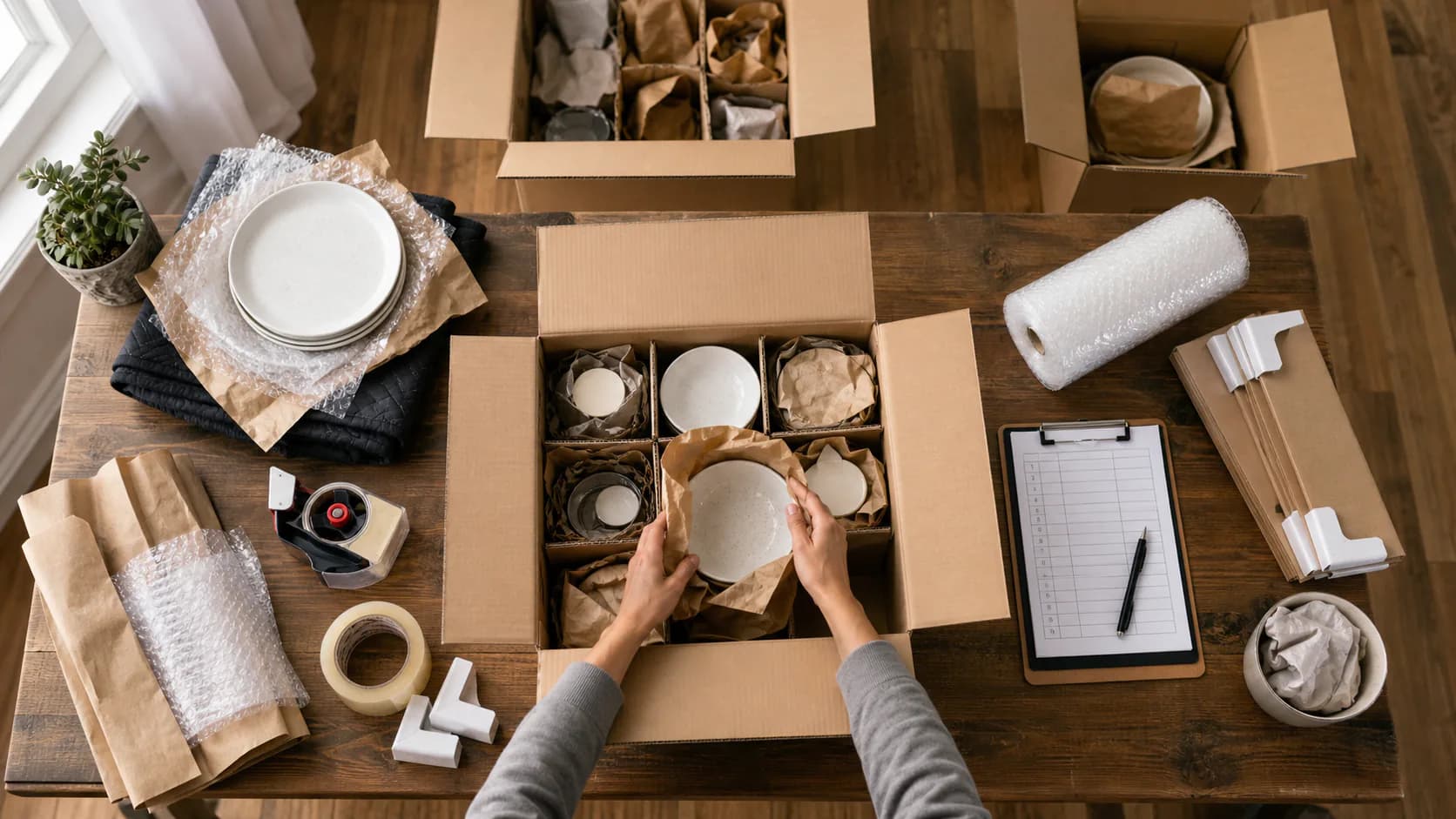
Packing hacks for moving
Packing hacks from long-distance movers: weight caps, fragile-proofing for highway transit, a labelling system that survives handoffs, and the trade-offs.
Learn more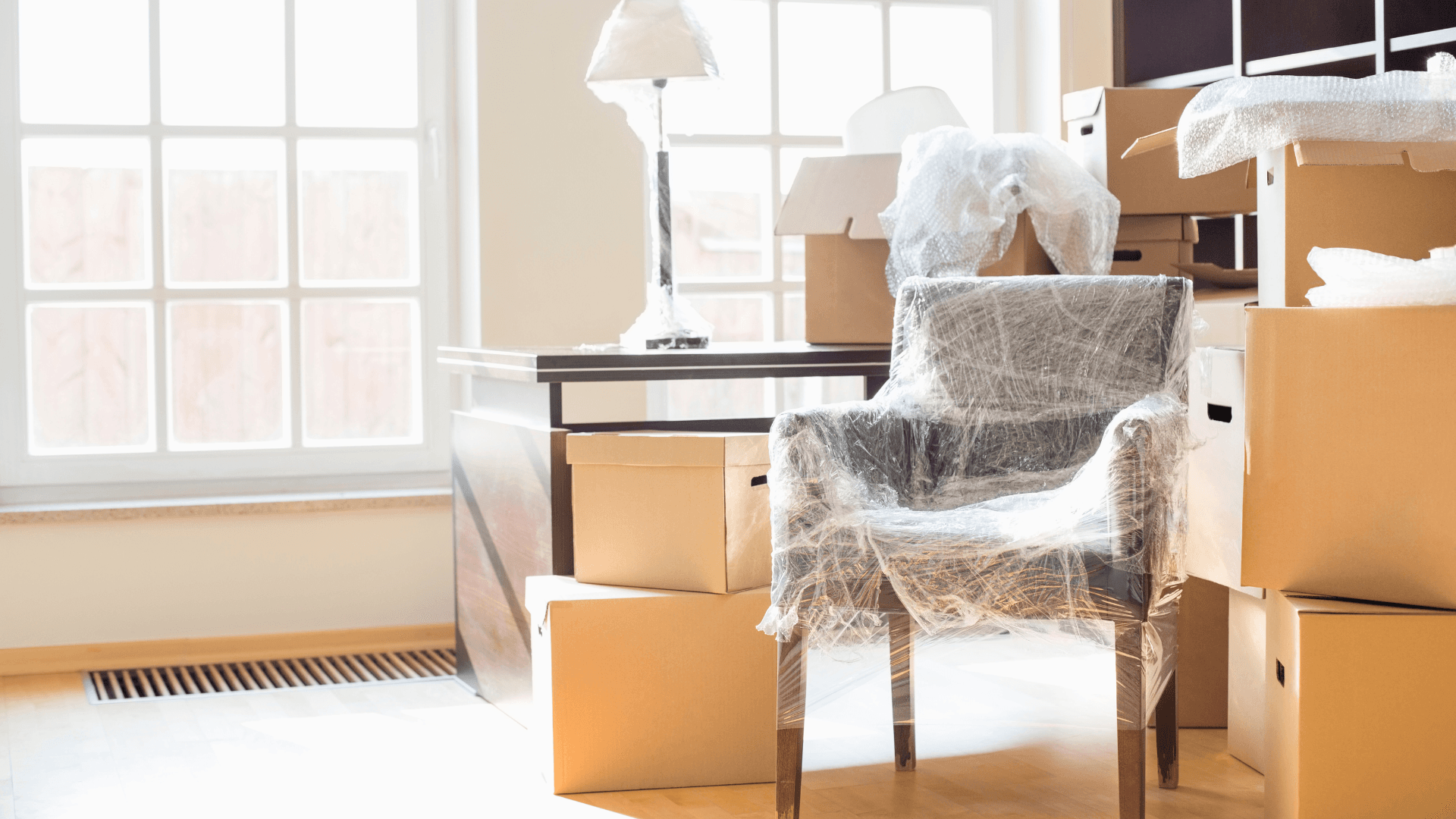
Packing materials for a long-distance move
A Canadian mover's guide to packaging materials for a long-distance move: which boxes and wraps to buy, what they cost, and when reused boxes are fine.
Learn more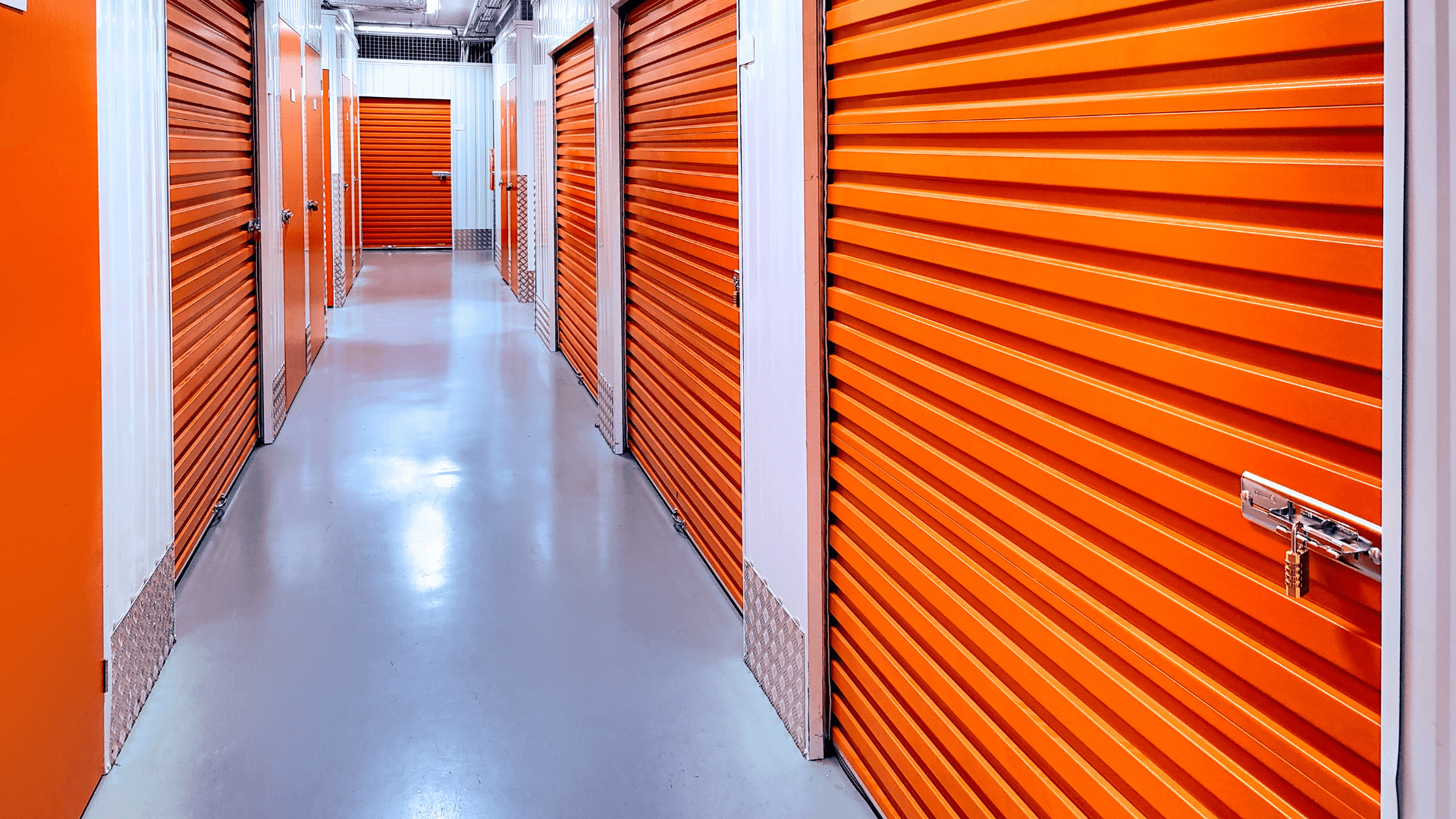
Choosing the right storage for your move
How to choose the right storage for a move: unit size, climate control, monthly costs in Canada, and when storage-in-transit beats renting a locker.
Learn more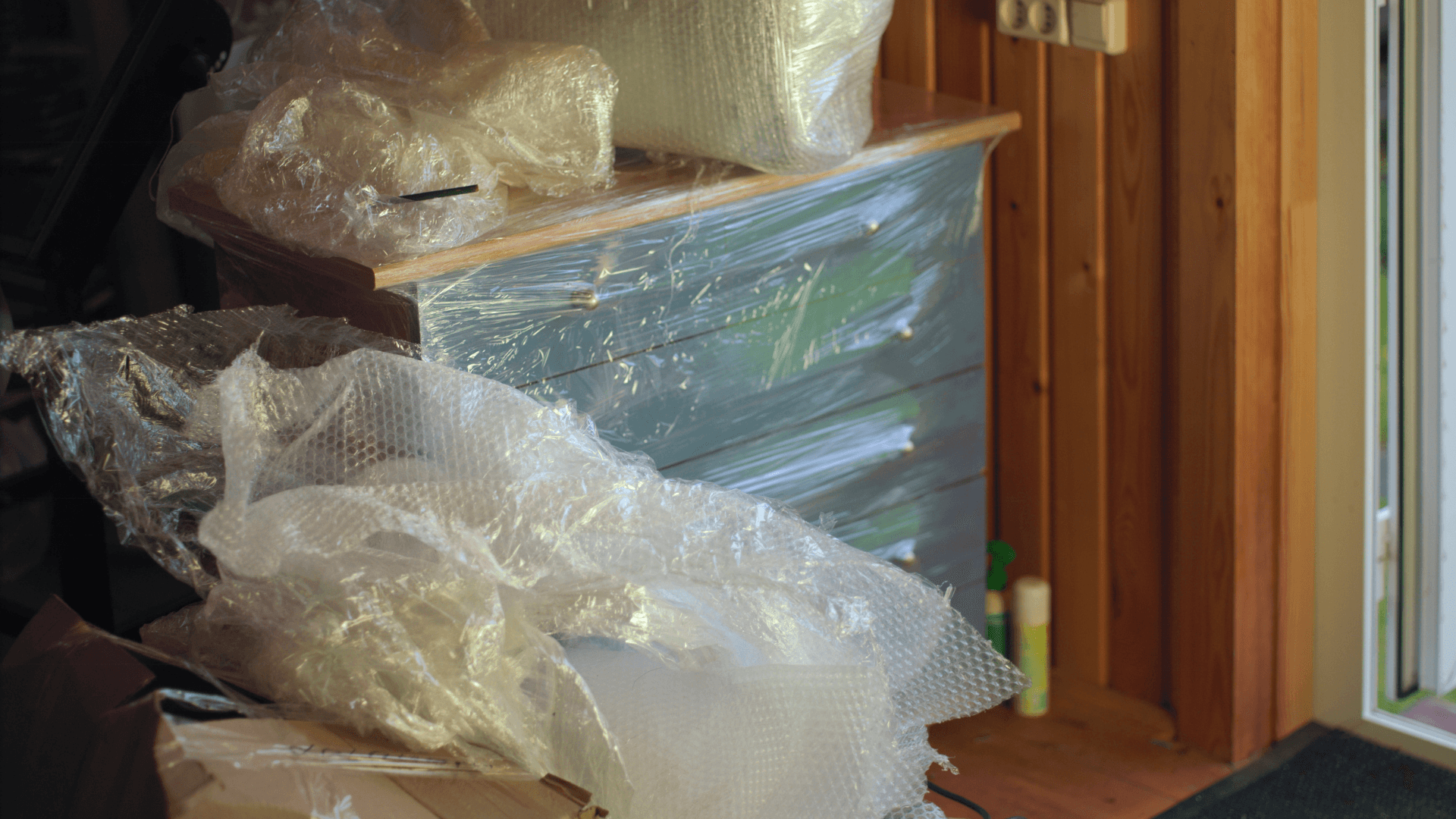
Moving large furniture across the country
How to move heavy, bulky furniture across Canada: measuring, disassembly, wrapping, real insurance limits, and when to hire pros. From MTS Moving crews.
Learn more

Director, MTS Moving
Mete Kalfa is the Director of MTS Moving and a second-generation long-distance relocation expert. Specializing in inter-provincial moves across Ontario, Alberta, and British Columbia, he leverages decades of family legacy and active Canadian Association of Movers (CAM) membership to provide transparent insights that protect consumers from industry scams.