
Long-Distance Moving With Pets: A Canadian Mover's Guide

Published Updated 8 min read

On this page
- At-a-glance pet moving checklist
- What should you do at the vet before moving?
- Documents and ID: the paperwork that gets a lost pet home
- How do you find pet-friendly accommodations en route?
- Preparing your pet before the move
- Acclimate your pet to their carrier or crate
- Keep the routine steady
- Consider calming products
- Practise short car trips
- Packing for your pet
- Pack the essentials and a travel kit
- Bring enough food and water
- During the move
- How do MTS movers handle pets on moving day?
- How do you handle rest stops on long Canadian drives?
- Settling in at the new home
Quick answer: To move long distance with pets, plan ahead: visit the vet and gather health records, update ID tags and microchip details, keep pets in a closed quiet room on moving day, travel with food, water, and comfort items, stop often, and set up a safe room first at the new home. Steady routine and patience ease their transition.

I’m Mete Kalfa, Director at MTS Moving and Storage and a second-generation long-distance mover based in Mississauga. Over the years our crews have loaded homes with dogs pacing the hallway, cats hiding under beds, and the occasional bird or lizard riding along for the trip. A cross-country move is disorienting for animals — they read the empty rooms and the stacked boxes as something is wrong long before they understand it’s a new home. This guide is the routine we walk our own customers through, built for Canadian interprovincial distances rather than a quick move across town.
At-a-glance pet moving checklist
- Key tasks
- Visit the vet, gather health records, update ID tags and microchip details
- Key tasks
- Acclimate them to the crate, keep routines steady, practise short car trips
- Key tasks
- Pack a travel kit, plus food and water for the trip and a few days after
- Key tasks
- Keep pets calm and secure, plan pet-friendly rest stops, never leave them in the car
- Key tasks
- Set up a safe room first and reintroduce familiar items
What should you do at the vet before moving?
Before a long haul, book a check-up so your vet can confirm your pet is fit for the trip. Cover these while you’re there:
- Confirm your pet is up to date on all vaccinations and ask for an itemized record.
- Request a copy of your pet’s full medical records to bring with you, plus a refill of any regular medications.
- Discuss whether your pet would benefit from a mild sedative or anti-anxiety medication, and pick it up early so you can test the dose well before moving day — never on the day itself.
- Ask your vet to scan the microchip, confirm it reads correctly, and check that your contact details on file are current.
- If you’re moving to a province where rabies vaccination is mandatory — Ontario law, for example, requires dogs, cats, and ferrets to be vaccinated — get the certificate dated and signed.
Documents and ID: the paperwork that gets a lost pet home
This is the single most important section for a long move, because the days a home is in transit are exactly when a spooked animal bolts. Get all three of these squared away before you leave, and you never have to think about them again:
- ID tags — update the tag with your new phone number (and new address, if you have one) before the drive, not after you arrive. A tag with a working phone number is still the fastest way a stranger reunites you with your pet.
- Microchip registration — a microchip is only useful if the contact details attached to it are current. Chips aren’t held in a provincial government database; the data lives with whichever private registry the chip was enrolled in (many are searchable Canada-wide). If you don’t know which registry holds yours, your vet can scan the chip and tell you. Log in and update your phone number and address so a shelter or clinic anywhere in the country can reach you.
- Health paperwork — keep vaccination certificates and full medical records in the car, not the moving truck. Rabies requirements vary by province, so check the destination’s rules before you leave. For international moves or pets being imported, follow the Canadian Food Inspection Agency’s pet travel guidance.
How do you find pet-friendly accommodations en route?
A drive like Edmonton to Toronto means at least a couple of overnight stops, so book pet-friendly rooms before you set out — arriving late and hunting for a place that takes a 40 kg dog is a bad end to a long day. Sites like BringFido and PetsWelcome list pet-friendly hotels, motels, and rentals across North America and let you filter by pet size and amenities.
When you book, be upfront about your pet’s size and breed — some properties cap weight or exclude certain breeds — and ask about pet fees or deposits so there are no surprises at check-in. Then call the hotel directly a day or two ahead to confirm the pet policy still stands.
Preparing your pet before the move
Acclimate your pet to their carrier or crate
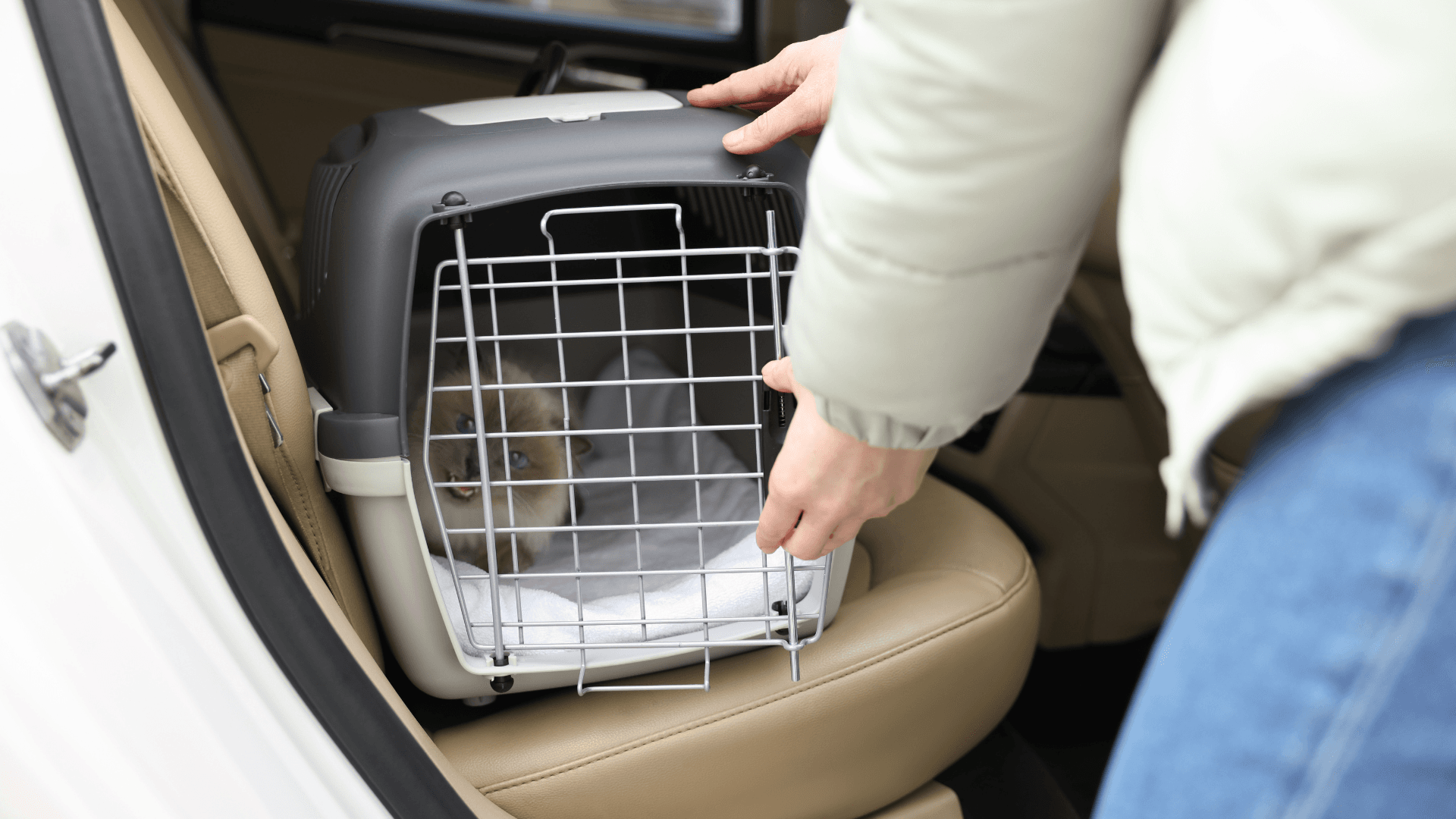
Introduce the carrier or crate weeks ahead, not the morning of. Leave it open in a room your pet already uses, line it with a favourite blanket or toy, and drop treats inside so they choose to go in on their own. By moving day the crate should read as a safe den, not a trap.
Keep the routine steady
The single most effective thing you can do for a stressed animal is not change everything at once. Stick to the same feeding, walking, and play times as the boxes pile up. Familiar rhythm is what tells a pet the world is still predictable even when the furniture is disappearing.
Consider calming products
If your pet is prone to travel anxiety, a couple of drug-free aids can help. Synthetic pheromone sprays release a calming scent version of the chemicals animals produce naturally, and can settle anxious dogs and cats during transport. Anxiety wraps — snug garments that apply gentle, steady pressure to the body, much like swaddling a baby — give some pets a similar sense of security. Both are non-invasive and worth trialling at home first, before the trip, so you know how your pet responds. For a pet with serious anxiety, ask your vet about medication rather than relying on wraps and sprays alone.
Practise short car trips
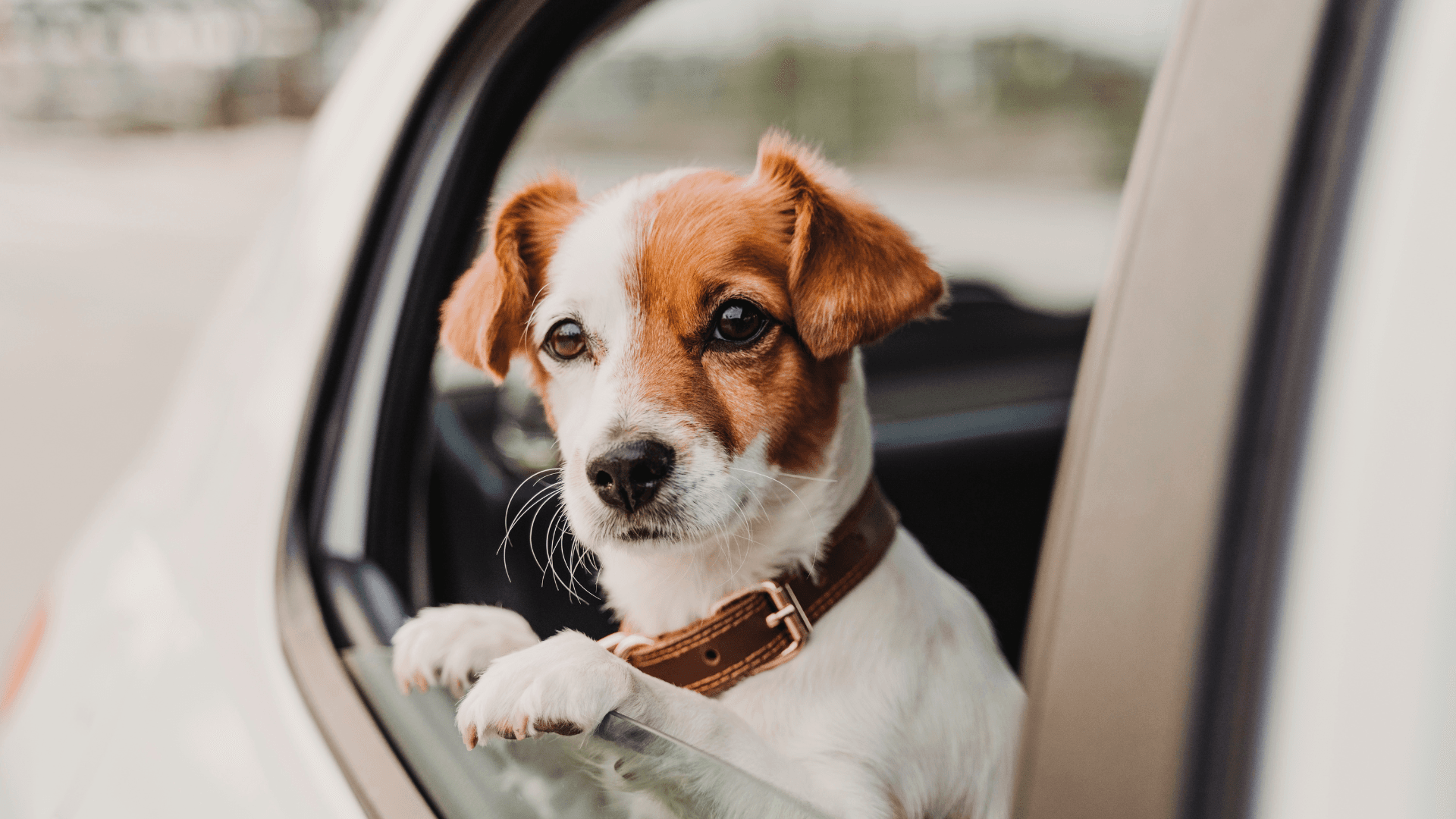
If your pet isn’t used to the car, build the habit gradually so the real drive isn’t their first long ride:
- Start short and calm. Take a few brief trips when your pet is relaxed and not hungry, always in a secure carrier or harness.
- Make it positive. Pair the car with something good — a treat, a short walk at the end — so travel comes to mean a reward, not the vet.
- Keep it comfortable. Keep the car well ventilated and avoid extreme heat or cold.
- Stretch the distance slowly. Add a little more time and distance each trip, working up toward the length of your real drive.
- Watch for distress. Some pets adjust faster than others. Be patient, and never force a panicking pet into the car.
Packing for your pet
Pack the essentials and a travel kit
List your pet’s must-haves — food, water, bowls, leash, a litter box for cats, and favourite toys — and pack familiar items where you can reach them. Then assemble a separate travel kit for the drive itself: medications, a favourite blanket, waste bags, and a cozy bed. Keeping the trip supplies apart from the boxes headed for the truck means everything you need is at hand at every stop.
Bring enough food and water
Pack enough of your pet’s usual food and water for the whole trip plus a few days after you arrive. A sudden diet change on top of a stressful move is a fast route to an upset stomach, so keep their regular food going until they’ve settled.
During the move
How do MTS movers handle pets on moving day?
Stay calm yourself — pets read your stress and mirror it. On moving day, our crews work around your pets rather than through them. We ask that animals be shut in a closed, quiet room (or left with a friend) while we load, because propped-open doors and a constant flow of movers are exactly how a frightened pet slips out unnoticed. Tell the crew which room is the pet’s safe room before we start, and we leave that room for last.
How do you handle rest stops on long Canadian drives?
Canada’s corridors mean real hours in the car: Edmonton to Toronto is approximately 3,400 km (driving), and Vancouver to Calgary approximately 970 km (driving), so plan your stops before you set out rather than improvising. At each stop, keep dogs leashed and cats secured in their carriers before any door opens. Offer water and a chance to relieve themselves. Many ONroute service centres along Ontario’s Highway 401 and Petro-Canada stops on the Trans-Canada Highway have grassed areas fine for a quick walk. Never leave a pet unattended in the car — during a Prairie summer or a winter cold snap, the temperature inside a parked vehicle turns dangerous within minutes.
Settling in at the new home
Set up one safe room first — before the rest of the house is unpacked. Put your pet’s bed, bowls, litter box, and familiar toys in it, close the door, and let them decompress there while the chaos of unloading happens elsewhere. Once the house is quiet, let them explore the rest of the place at their own pace over the next few days. Keep feeding and walking times on the same schedule they knew before the move; that continuity is what turns an unfamiliar house into home faster than anything else.
For a fuller picture of what a cross-country move involves — budgeting, timelines, and the rest of the logistics — see our long-distance moving costs guide and the ultimate moving checklist.
Related guides

How to move long distance with plants
Most movers won't carry live plants interprovincially. Here's how to move houseplants yourself across Canada, plus CFIA and provincial pest rules.
Learn more
Moving across provinces with kids
Moving across provinces with kids? Transfer school records and health cards, time the move around the school year, and help kids settle—from a family mover.
Learn more
The ultimate moving checklist
A movers 8-week long-distance moving checklist for Canada: how to vet a mover, read an estimate, choose valuation coverage, and pack week by week.
Learn more
Long-distance moving costs in Canada
What it costs to move across Canada in 2026, by home size and by route (Toronto–Calgary, Toronto–Vancouver), plus the hidden fees to check before you book.
Learn more
Director, MTS Moving
Mete Kalfa is the Director of MTS Moving and a second-generation long-distance relocation expert. Specializing in inter-provincial moves across Ontario, Alberta, and British Columbia, he leverages decades of family legacy and active Canadian Association of Movers (CAM) membership to provide transparent insights that protect consumers from industry scams.