
Long-Distance Moving to Toronto? Here’s How to Do It Right

Published Updated 11 min read

On this page
- At a Glance: Moving to Toronto
- Why People Move to Toronto
- Career Opportunities
- Cultural Diversity
- Education
- Family Connections
- Migration Snapshot (2024-2025)
- Best Neighbourhoods for Different Lifestyles
- Young Professionals: King West & Liberty Village
- Families: North York & Etobicoke
- Affordable & Student Options: Scarborough & East York
- Getting Around Toronto: Transit and Traffic
- How much does the TTC cost?
- Driving Challenges: Congestion & Parking
- Biking & Walking Downtown
- What to Watch Out For When Moving to Toronto
- Condo Rules: Elevator Bookings and Moving Days
- Downtown Streets and Access Challenges
- Traffic and Event Timing
- What a Long-Distance Move Into Toronto Actually Costs
- Choosing a Mover for a Toronto Relocation
- FAQs About Long Distance Moving to Toronto
Quick answer: Long-distance moving to Toronto means relocating from another province with a professional interprovincial mover who handles condo elevator bookings, tight downtown access, and a multi-day delivery window. Based on our own interprovincial quotes, a one-bedroom from Western Canada typically runs $2,500–$4,000, rising to $6,000+ for a three- or four-bedroom home, depending on weight, distance, and access.
I’m Mete Kalfa, Director of MTS Moving. I’m a second-generation long-distance mover and a member of the Canadian Association of Movers (CAM), and our crews run interprovincial routes into the Greater Toronto Area every week. Toronto is one of the most demanding cities we deliver into — not because of the drive, but because of what happens in the last 200 metres: the elevator booking, the loading dock, and the one-way street outside your building.
This guide walks through why people move here, what the city costs, and — most importantly for the move itself — the logistics that trip up out-of-province relocations, drawn from what we actually see on Toronto delivery days.
At a Glance: Moving to Toronto
Opportunities & diversity: Toronto is Canada’s largest economic hub and one of the most multicultural cities in the world, drawing tens of thousands each year for careers, education, and global connectivity.
Cost of living & housing: Opportunity comes at a price — downtown one-bedroom rents sit near $2,300–$2,700, though more affordable options exist in suburbs like Scarborough and East York.
The move itself: Condo elevator bookings, narrow downtown streets, scarce curb space, and month-end congestion make Toronto a city where a smooth delivery depends on booking access weeks ahead, not just showing up.
Why People Move to Toronto
People move to Toronto for four main reasons: career opportunities, cultural diversity, education, and family ties. Even with net interprovincial migration losses to other provinces, Toronto remains Canada’s top destination for international newcomers.
Career Opportunities
Toronto is Canada’s largest economic hub and consistently ranks among North America’s top cities for career growth. It leads in finance, tech, healthcare, media, and education, with global corporations like Google, Microsoft, and RBC anchoring its economy.
Toronto added roughly 95,900 tech jobs between 2018 and 2023 — the most of any North American market over that span — cementing its place as a top-tier tech and AI centre. Salaries and benefits are generally higher than in most provinces, which is a big part of why we move so many professionals and new graduates into the city.
Cultural Diversity
Toronto is one of the most multicultural cities in the world. In the 2021 Census, 46.6% of Toronto CMA residents were immigrants, and 57.0% of the CMA identified as a visible minority (55.7% within the City of Toronto itself). With more than 160 languages spoken and over 200 ethnic origins represented, the city is a global crossroads where newcomers reliably find community.
Education
The University of Toronto ranks #21 globally for teaching and research, while schools like York, TMU, and Centennial College maintain strong graduate employment rates. Families and international students alike value the city’s wide range of public, private, and specialized programs — one reason we handle so many August and early-September moves timed to the academic year.
Family Connections
Family reunification remains a strong motivator. Many Canadians move to Toronto to join relatives, support children in university, or access newcomer services. Federal and provincial policies continue to encourage family-based settlement, sustaining Toronto’s role as a family hub.
Migration Snapshot (2024-2025)
- Toronto/Ontario Data
- 201,788 (42% of Canada total)
- Toronto/Ontario Data
- -24,432 (more left than arrived)
- Toronto/Ontario Data
- +189,173 (1.38M total)
- Toronto/Ontario Data
- -69,522 (more moved to other Ontario cities)
- Toronto/Ontario Data
- 120,000–150,000 per year
Sources: Statistics Canada population estimates — provincial estimates (Ontario immigration, interprovincial migration and non-permanent-resident figures) and subprovincial areas, 2024 (Toronto CMA migration), covering the year to mid-2024.
Toronto continues to attract the world with its economic strength, education system, and cultural mix, even as rising costs push some Ontarians to other provinces or smaller cities. If the core’s prices are steering you outward, the nearby corridor cities we serve — Hamilton, Barrie, and Kitchener — are where a lot of that outflow is landing.
Best Neighbourhoods for Different Lifestyles
Toronto’s diversity means there’s a neighbourhood for every stage of life — whether you’re chasing career opportunities, raising a family, or starting out as a student. From a moving standpoint, the trade-off is consistent: the more central and high-rise the address, the stricter the access rules, so factor that into where you land.
Young Professionals: King West & Liberty Village
King West is the epicentre of Toronto’s fast-paced, stylish lifestyle — modern condos, rooftop patios, and an endless mix of restaurants and bars, all within walking distance of major employers and transit. Liberty Village offers the same urban energy with a slightly more relaxed vibe, with lofts, co-working spaces, and fitness studios.
These are also among the toughest addresses we deliver into. Most of the King West and Liberty Village towers have a single service elevator, a booked loading bay, and narrow surrounding streets — so the move date is really set by whatever elevator slot the building will give you, not by the truck. Yonge & Eglinton, the Bay Street corridor, and The Annex carry the same high-rise constraints.
Families: North York & Etobicoke
Families tend to gravitate toward North York, where larger detached homes, playgrounds, and strong schools give it a suburban feel without losing easy access to downtown. Etobicoke is equally popular for its safe neighbourhoods, well-regarded schools, and waterfront parks. The Beaches, High Park, Davisville Village, and Leaside also blend family-friendly amenities with community spirit. The upside for the move: detached homes with a driveway are far simpler to deliver into than a downtown tower — no elevator booking, and the crew can usually park close.
Affordable & Student Options: Scarborough & East York
For students and newcomers on a budget, Scarborough offers multicultural living with rents notably lower than downtown, and it’s home to the University of Toronto Scarborough campus. East York is quieter but equally appealing, with transit connections, tree-lined streets, and more affordable rentals than the core. Parkdale, York University Heights, and Cabbagetown are also accessible options close to the action.
Getting Around Toronto: Transit and Traffic
Navigating Toronto means choosing between one of North America’s largest transit systems, notoriously congested roads, and a growing network of cycling and pedestrian-friendly routes.
How much does the TTC cost?
Toronto’s transit system (the TTC) covers buses, streetcars, and subways. Current fares (as of June 2026) look like this:
- Price
- $3.35 per ride
- Price
- $3.30 per ride
- Price
- $156
- Price
- $128.15
- Price
- $143/month
- Price
- Ride free
The Presto card costs $4 to purchase and offers benefits like easy reloading and two-hour transfers with unlimited boardings. Regional integration programs, like One Fare, are making cross-region commuting more affordable. Note that the TTC is retiring its monthly passes on August 31, 2026 and replacing them with automatic monthly fare capping, so check current pricing before you buy.
Driving Challenges: Congestion & Parking
Toronto traffic is among the worst in Canada, with congestion made worse by rapid population growth, constant construction, and downtown events. On-street parking runs roughly $1.50 to $6.75 per hour and continues to rise; off-street lots and garages are climbing too, with Green P lots offering the most affordable (but high-turnover) options. This matters on move day as much as on a commute — a truck with nowhere legal to sit is a delayed unload.
Biking & Walking Downtown
Toronto continues to expand its cycling infrastructure. In 2024, 24 km of new bike lanes were added, with further expansion planned along Bloor, Eglinton, and Avenue Road. That’s good news for residents and a real factor for movers: separated lanes have quietly removed a lot of the curb space trucks used to rely on downtown.
What to Watch Out For When Moving to Toronto
This is where an out-of-province move actually succeeds or fails. Toronto’s destination-side logistics — condo rules, tight streets, and traffic — are strict enough that they should shape your date, not the other way around.
Condo Rules: Elevator Bookings and Moving Days
Most condo buildings require you to reserve the service elevator for a move, typically one to four weeks in advance, and they hand out limited slots (often a two- to four-hour window). Many require a refundable damage deposit, a certificate of insurance from your mover, and completed move-in forms before they’ll release the elevator. Some buildings ban moves on Sundays and holidays outright.
In our experience, the single most common cause of a stressful Toronto delivery is an elevator slot that doesn’t match the truck’s arrival — the shipment is on the road for days from Alberta or BC, but the building will only give you a Tuesday-afternoon window. Book the elevator the moment you have a delivery estimate, ask the property manager exactly what paperwork they need from the mover, and confirm the slot in writing.
Downtown Streets and Access Challenges
Toronto’s core is full of narrow, one-way streets that make unloading difficult. Curb space is scarce, construction is ongoing, and new bike lanes limit where a truck can legally stop. For many downtown towers the practical answer is a smaller shuttle vehicle or a booked loading dock rather than parking a full trailer on the street — worth confirming with your mover before the truck leaves the origin city.
Traffic and Event Timing
Scheduling around Toronto’s traffic and events is as important as packing your boxes:
- Best times to move: early mornings or evenings to avoid rush hour.
- Check calendars: parades, festivals, and roadwork frequently close downtown routes.
- Month-end crunch: the last few days of the month are when leases turn over, so elevators, movers, and parking permits all book up first — mid-month dates are easier to secure and often smoother.
The pattern is consistent: Toronto’s density, condo rules, and traffic mean a successful move depends on preparation. Book the elevator early, scout parking, and time the delivery away from month-end and rush hour.
What a Long-Distance Move Into Toronto Actually Costs
Costs depend mainly on the weight of your shipment, the distance travelled, and how hard the destination is to access. Based on our own interprovincial quotes into the GTA, here are typical ranges from Western Canada:
- Typical long-distance cost from Calgary or Vancouver
- $2,500–$4,000
- Typical long-distance cost from Calgary or Vancouver
- $6,000+
These are guide ranges, not a locked price — a downtown high-rise with a shuttle requirement and a strict elevator window will cost more to service than a detached North York home with a driveway. Always request an all-in written quote with valuation coverage included so there are no surprises on delivery day. For how these numbers are built, see our breakdown of what drives long-distance moving costs and how to avoid hidden moving fees.
Choosing a Mover for a Toronto Relocation
Toronto moves reward experience with high-rise and condo logistics, so a few things are worth checking before you book any interprovincial mover:
- Written, all-in quotes with valuation coverage stated — not a verbal estimate.
- A weight verification process you can see, since inflated weight is one of the oldest long-distance moving scams (more on that in our guide to avoiding long-distance moving scams in Canada).
- A realistic delivery window in writing, given the multi-day transit from Western Canada.
- Direct handling rather than brokered or rail-transferred loads, so one accountable crew handles your shipment end to end.
- Verifiable reputation — check Google, HomeStars, and BBB rather than testimonials on the mover’s own site.
At MTS, we’re a CAM member with a 4.9-star rating from 741 Google reviews, and we’re also listed on Yelp, HomeStars, and BBB (Mississauga). We run our own crews on interprovincial corridors across Ontario, Alberta, British Columbia, and Quebec, and offer packing, secure storage and storage-in-transit for when your Toronto move-in date lags behind your move-out. If you want figures for your own move, our free quote tool works from your inventory and route.
FAQs About Long Distance Moving to Toronto
How do I move to Toronto from another province? Choose an experienced interprovincial mover who understands condo rules, traffic, and access challenges. Book your move — and your building’s service elevator — early, especially at month-end, to line up the elevator slot, parking, and delivery timeline.
What’s the cheapest way to move to Toronto long-distance? The lowest-cost option is usually a shared or consolidated move, where your belongings travel alongside other shipments. It’s cheaper but slower and less predictable on timing, so make sure the delivery window and any consolidation are spelled out in writing before you book.
How much does it cost to move to Toronto from BC or Alberta? Based on our interprovincial quotes, expect roughly $2,500–$4,000 for a one-bedroom and $6,000+ for a three- or four-bedroom, depending on weight, distance, and destination access. Always get an all-in written quote with coverage included.
What should I know before moving to Toronto? Toronto is vibrant and diverse, but the move takes preparation. Condo buildings usually require a booked elevator, insurance paperwork, and a deposit; downtown streets are narrow with limited curb space; and traffic and month-end turnover can compress your options. Sort the destination-side access first and the rest of the move gets much easier.
Related guides
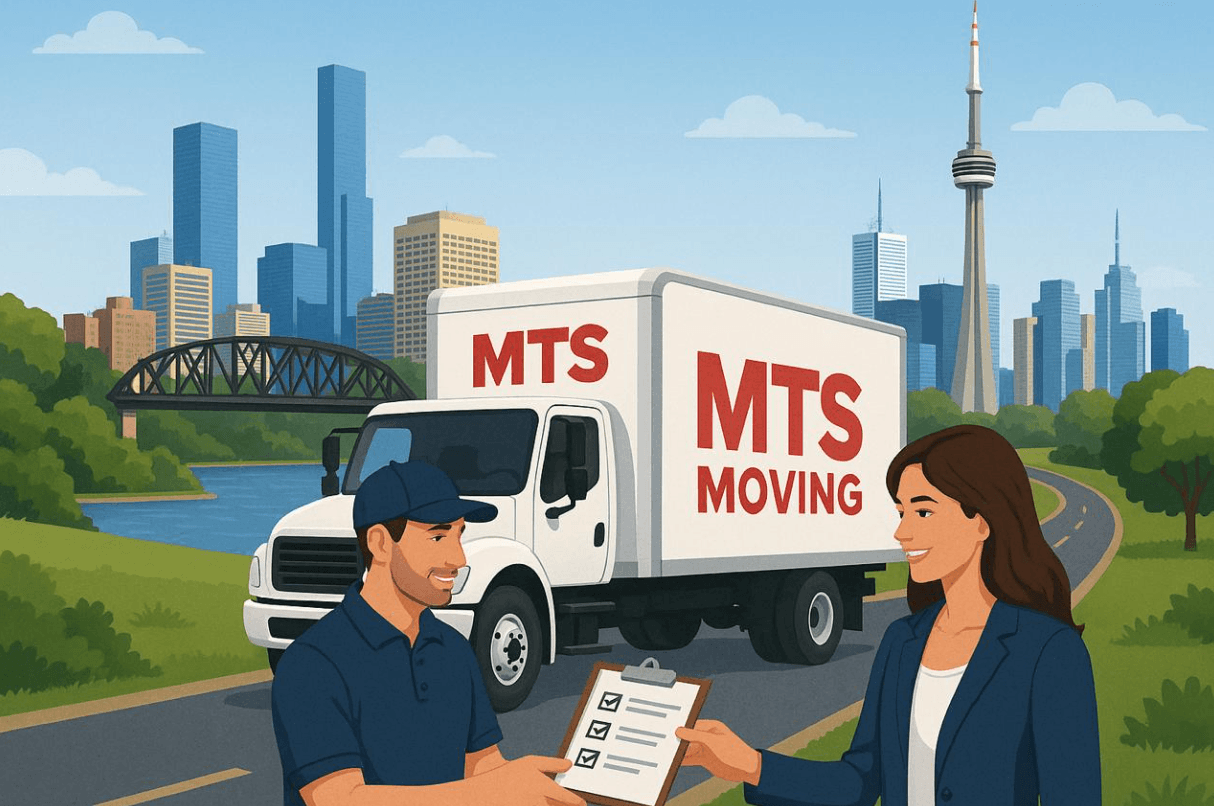
Edmonton to Toronto movers: the 2025 guide to costs and avoiding scams
Moving from Edmonton to Toronto? Real corridor costs, a 5-8 day delivery timeline, the 3,480 km route, and Toronto parking, elevator and HST logistics.
Learn more
Toronto to Montreal moving tips
What it costs to move from Toronto to Montreal, the 544 km 401 drive, Quebec's July 1 Moving Day surge, and how to plan the move — from a Canadian mover.
Learn more
Moving to Hamilton, Ontario
Moving to Hamilton, Ontario? A mover's guide to real costs vs Toronto, the best neighbourhoods, jobs, commuting, and the trade-offs to weigh first.
Learn more
Moving to Barrie, Ontario
Moving to Barrie? A CAM-member mover breaks down real 2026 home prices, rents, commute, neighbourhoods and what a long-distance move to Barrie actually costs.
Learn more
Moving to Kitchener, Ontario
Moving to Kitchener, ON? Real numbers on cost of living, jobs, and neighbourhoods, plus a mover's guide to the 401 corridor from a Canadian long-distance crew.
Learn more
Director, MTS Moving
Mete Kalfa is the Director of MTS Moving and a second-generation long-distance relocation expert. Specializing in inter-provincial moves across Ontario, Alberta, and British Columbia, he leverages decades of family legacy and active Canadian Association of Movers (CAM) membership to provide transparent insights that protect consumers from industry scams.