
Moving Large Furniture Across the Country: A Mover's Field Guide

Published Updated 8 min read
On this page
- Why is large furniture the hard part of a long-distance move?
- How do you measure furniture so it actually fits?
- Should you disassemble it — and what will void the warranty?
- How do you protect furniture for a cross-country haul?
- What does moving insurance actually cover in Canada?
- When is DIY reasonable, and when should you hire pros?
- Plan the route, the timing, and the storage gap
Quick answer: To move large furniture across the country, measure each piece against your doorways and stairs, disassemble whatever the manufacturer allows, pad and shrink-wrap every surface, and plan the lift path before anyone touches the item. For heavy or high-value pieces on a long haul, hired crews with straps, dollies, and proper valuation coverage usually cost less than replacing a damaged sofa or a thrown-out back.
I’m Mete Kalfa, director at MTS Moving & Storage in Mississauga. My family has run long-distance crews for two generations, and we’re members of the Canadian Association of Movers. The advice below is what our crews actually do with the awkward pieces — the sectionals, armoires, glass tables, and pianos — on interprovincial runs between Ontario, Alberta, BC, and Quebec, not generic packing tips you can find anywhere.
Why is large furniture the hard part of a long-distance move?
Boxes are easy: they stack, they’re uniform, they crush-test the same way every time. Furniture is where cross-country moves go wrong. A single sectional or solid-wood dresser can outweigh two dozen boxes, doesn’t fit a standard dolly, and has to survive 3,000+ km of road vibration instead of a 20-minute drive across town.
Three things make big pieces risky over distance:
- Weight drives your price. Interprovincial moves are quoted by weight (or cubic volume) and distance, not by the hour the way a local move is — see our long-distance moving cost breakdown. Heavy furniture is the single biggest lever on your quote, so it’s worth deciding early what’s actually worth shipping.
- Vibration finds every weak joint. A wobbly table leg or a loose bolt that survives daily use at home will work itself apart on a multi-day haul. Road shock, not the lift, is what cracks most furniture in transit.
- The lift path matters more than the truck. Most furniture damage on our jobs happens in doorways, stairwells, and elevators — the pinch points — not on the highway.
How do you measure furniture so it actually fits?
Before anything gets wrapped, our crews measure. The rule on our trucks is measure the piece, then measure every gap it has to pass through — at both ends of the move.
- Note the height, width, and depth of each large item. For irregular pieces (recliners, corner sectionals), measure at the widest and tallest points, not the average.
- Measure doorway openings, hallway widths, stairwell headroom, and elevator interiors. The diagonal of a doorway is bigger than its straight width — a piece that won’t fit flat often slides through on an angle.
- Watch for the choke points people forget: the turn at the top of a staircase, a low basement bulkhead, a tight condo elevator, and the swing radius of the door itself.
Do this on paper before moving day. If a dresser won’t clear the new bedroom door, you want to know while you can still plan a disassembly or a window hoist — not with a loaded truck idling outside.
Should you disassemble it — and what will void the warranty?
Breaking a piece down makes it lighter, safer to carry, and less likely to snag in a doorway. But there’s a real trade-off most tip lists skip.
Disassemble when it’s designed to come apart:
- Beds: Remove the mattress, unbolt the frame, and separate the slats. Bag every bolt and bracket and tape the bag to the frame — loose hardware is the number-one thing that goes missing.
- Tables: Take off the legs and remove any leaf extensions; wrap leaves separately so they don’t rub.
- Sofas and sectionals: Pull the legs, cushions, and any modular sections. A sectional that splits into three pieces is three manageable carries instead of one that jams the stairs.
Think twice before you disassemble when:
- The piece is under manufacturer warranty — many warranties on frames, adjustable beds, and modular furniture are voided if the customer takes them apart. Check the terms first.
- Some carriers won’t cover items the customer disassembled under their valuation coverage, because they can’t vouch for how it was rebuilt. If you want the mover on the hook for it, let their crew do the disassembly.
- It’s an engineered or press-fit piece (a lot of flat-pack furniture) that loses structural integrity once the fasteners come out and back in. Sometimes shipping it whole and well-padded is safer than rebuilding it.
At MTS our crews handle disassembly and reassembly as part of the move, which keeps the piece under our valuation coverage end to end. If you’d rather have professionals pack and break down the awkward items, here’s what full-service packing actually covers.
How do you protect furniture for a cross-country haul?
Over-the-road distance means padding for vibration, not just corner protection. The materials matter, and so does the order you apply them.
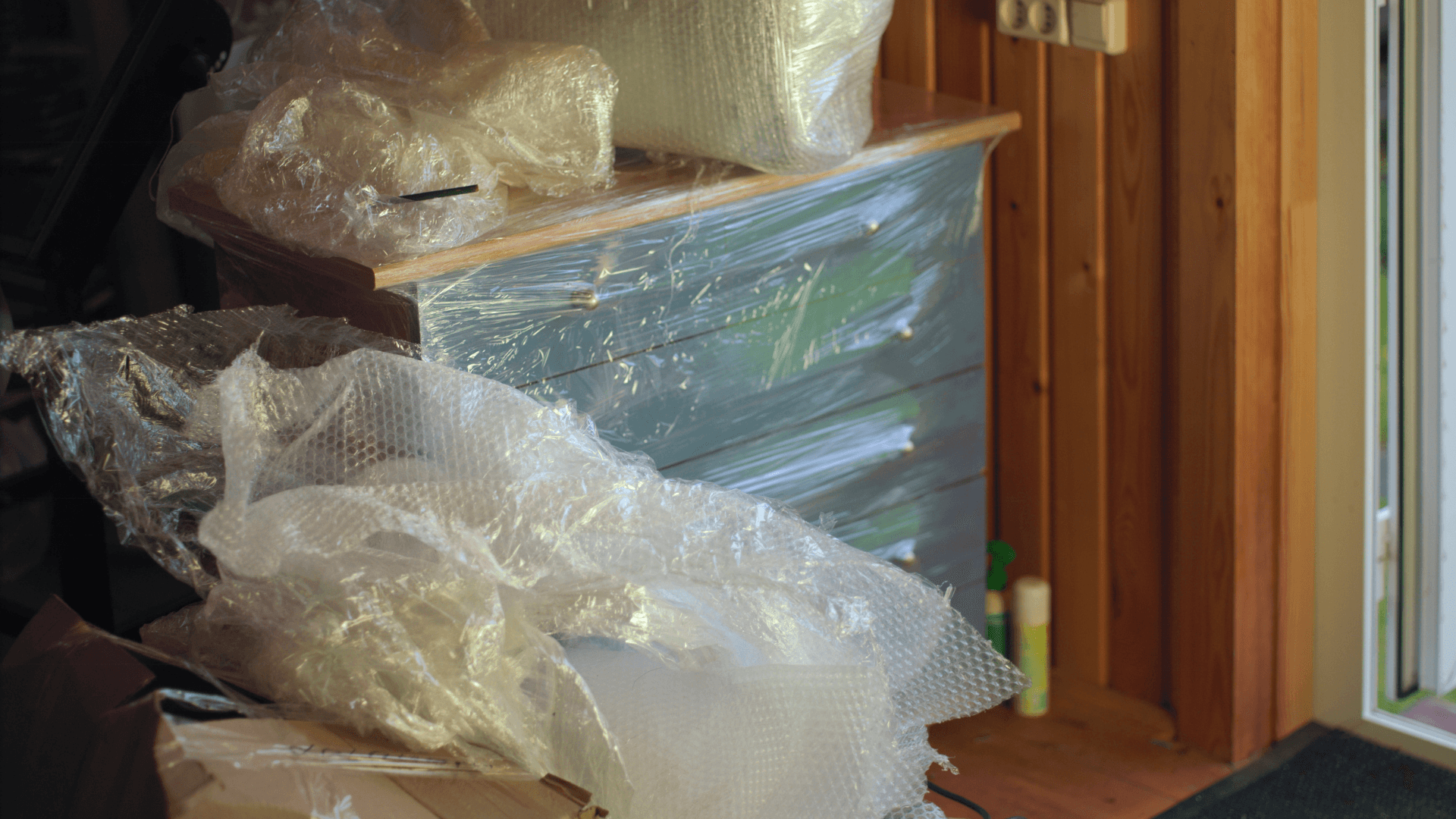
- Moving blankets / furniture pads first. These are the workhorse — a full wrap on wood and metal surfaces absorbs road shock and stops scratches and dents. Skimping here is the most common DIY mistake we see.
- Bubble wrap on the fragile bits: glass tabletops, mirrors, carved corners, and exposed edges. Never ship glass flat — stand it on edge, blanketed, so flex doesn’t crack it.
- Stretch wrap over the blankets to hold everything in place and keep upholstery clean. Don’t put stretch wrap directly on real wood or leather for a multi-day trip — trapped moisture can haze or mark the finish. Blanket first, plastic over the blanket.
- Secure the loose parts. Tape or strap drawers and doors shut so they can’t swing open and snap off mid-transit.
For the full materials rundown — what to buy and what to skip — see our guide to packaging materials for long-distance moving, and these packing hacks for the boxes that travel alongside your furniture.
What does moving insurance actually cover in Canada?
This is where people get burned, so it’s worth being precise. In Canada, every household moving contract includes basic coverage by default, but “included” does not mean “made whole.”
- What it pays
- $0.60 per pound / $1.32 per kg, per article
- Reality for large furniture
- A 100 lb table destroyed in transit pays out $60 — even if it cost $1,000 to replace
- What it pays
- Repair or replacement at today’s market price
- Reality for large furniture
- Sold with a minimum valuation (commonly $10/lb of shipment weight); the right choice for solid-wood, antique, or high-value pieces
Those figures come straight from the Canadian Association of Movers’ liability guidance. The takeaway: if you own furniture that would genuinely hurt to replace, ask your mover about declared / replacement value coverage before the truck is loaded — the default $0.60/lb is close to worthless on a heavy antique. This is one of the questions worth asking any mover you’re vetting; our cross-province mover checklist covers the rest.
When is DIY reasonable, and when should you hire pros?
Honest answer: it depends on the pieces and the distance, and hiring movers is not always the right call.
DIY can make sense when you have few large items, they’re lightweight or already flat-pack, you have strong help and a suitable rented truck with straps and dollies, and nothing is irreplaceable. Our move-yourself long-distance guide walks through doing it safely.
Hire a crew when you’re moving solid-wood or antique furniture, anything over roughly 45 kg (100 lb) that has to come down stairs, glass or stone tops, a piano, or when a warranty or valuation coverage is on the line. A full-service crew brings the straps, dollies, ramps, and proper truck restraints — and, crucially, the coverage that a rented van doesn’t include.
Weigh it against the real risk: a damaged sofa, a cracked heirloom, or a herniated disc all cost more than the difference between a rental and a professional crew. For big or valuable pieces on a long haul, that math usually favours hiring out.
Plan the route, the timing, and the storage gap
The last thing large furniture needs is an unplanned detour or a night sitting exposed.
- Route: Long, heavy loads care about low bridges, narrow access, and construction. For a full-service move this is the mover’s job; if you’re driving a rental, check clearances before you commit to a route.
- Timing: Long-distance furniture rides in a shared or dedicated trailer with a delivery window, not a fixed hour. Confirm that window in writing and plan around it.
- The gap between homes: If your places don’t line up on the same day, don’t leave a sectional in a garage or a hallway. Storage-in-transit keeps big pieces climate-protected and insured until your new place is ready — we handle this routinely on interprovincial runs.
MTS Moving & Storage runs long-distance furniture across Ontario, Alberta, BC, and Quebec, and we hold a 4.9-star rating from 741 Google reviews. If you want the heavy, awkward pieces handled by a crew that does it every week, get a free, weight-based quote and we’ll build the plan around your furniture.
Related guides

What to Pack First When Moving
A long-distance mover's room-by-room order for what to pack first and last, plus a first-night box list that keeps essentials within reach on arrival.
Learn more
Packaging Materials for Long-Distance Moving
A Canadian mover's guide to packaging materials for a long-distance move: which boxes and wraps to buy, what they cost, and when reused boxes are fine.
Learn more
Packing Hacks for Moving
Packing hacks from long-distance movers: weight caps, fragile-proofing for highway transit, a labelling system that survives handoffs, and the trade-offs.
Learn more
Choosing the Right Storage for Your Move
How to choose the right storage for a move: unit size, climate control, monthly costs in Canada, and when storage-in-transit beats renting a locker.
Learn more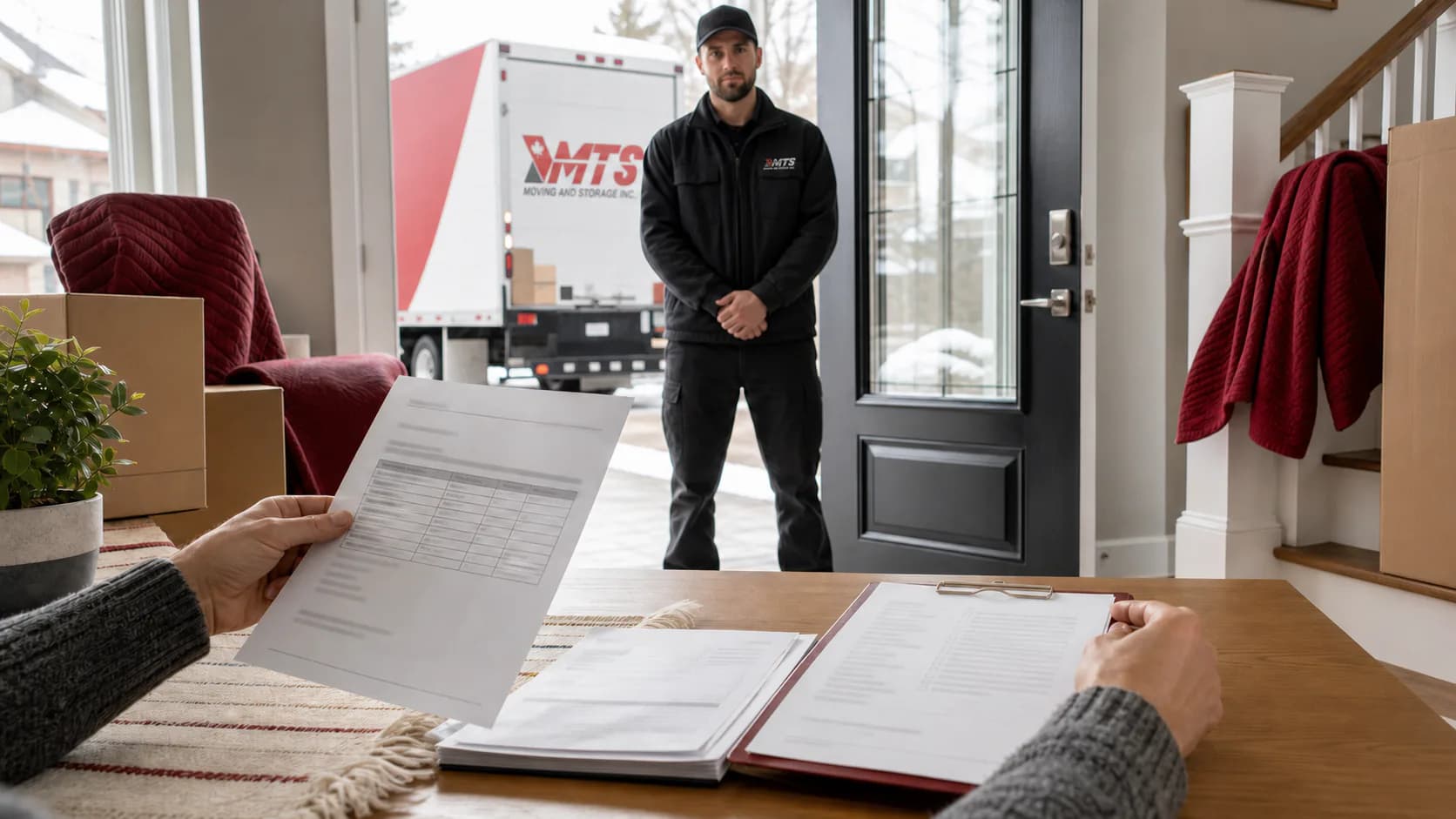
What to Look for in Cross-Province Movers
How to vet cross-province movers: the credentials, coverage, and contract terms that separate legitimate interprovincial carriers from rogue operators.
Learn more
Director, MTS Moving
Mete Kalfa is the Director of MTS Moving and a second-generation long-distance relocation expert. Specializing in inter-provincial moves across Ontario, Alberta, and British Columbia, he leverages decades of family legacy and active Canadian Association of Movers (CAM) membership to provide transparent insights that protect consumers from industry scams.